Warning to South African property managers letting electric and plug-in hybrid car owners install whatever chargers they want
Body Corporates and Homeowners Associations should be wary of what types of EV chargers they allow owners and residents to install.
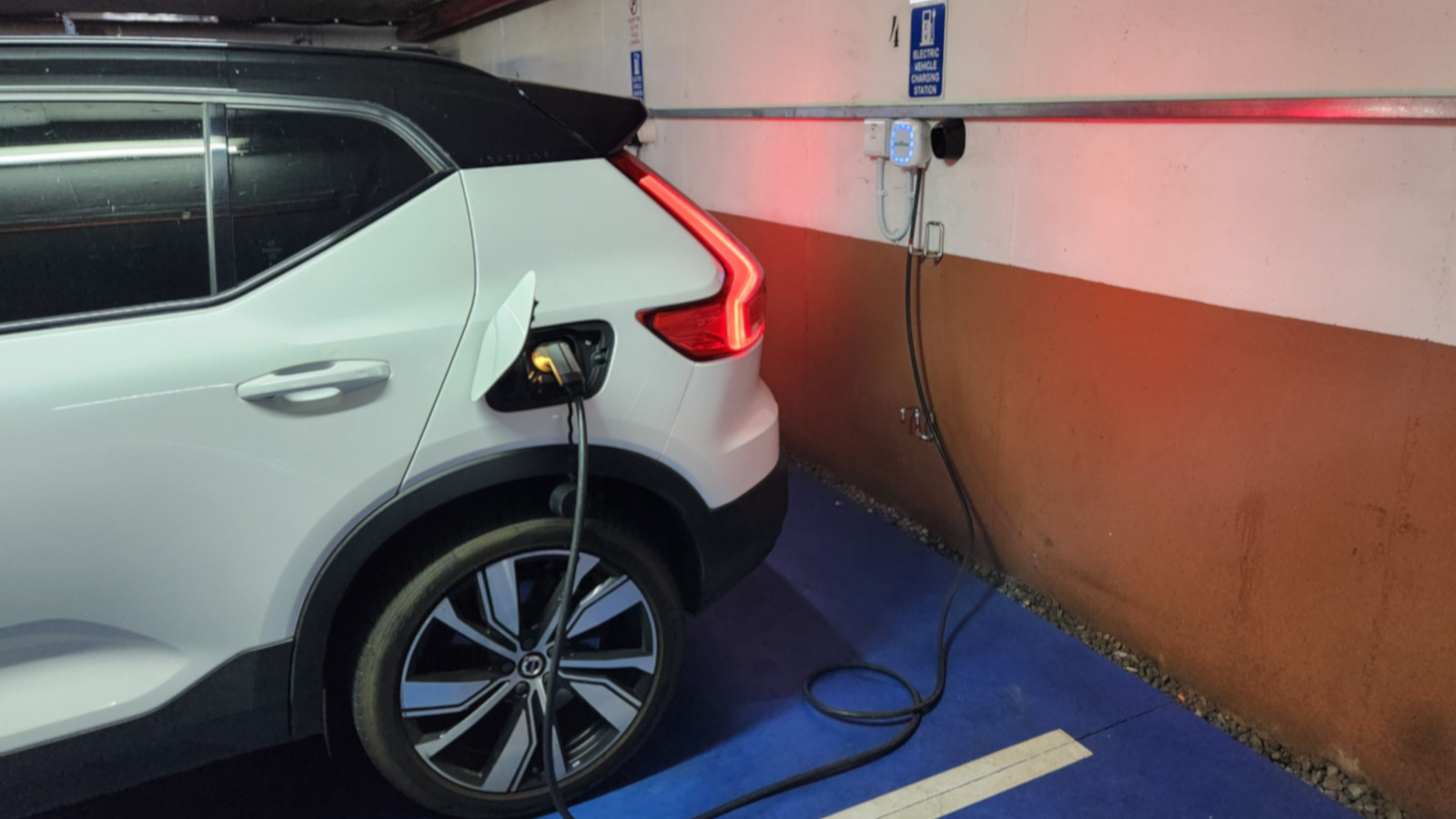
South Africa is seeing a rapid increase in the adoption of fully-electric vehicles (EVs) and plug-in hybrids (PHEVs).
Body Corporates and Homeowners’ Associations will want to avoid potential future friction with homeowners and residents arising from cheap or ill-suited chargers and software systems.
Conduit Energy strongly recommends that property managers and owners give preference to EV chargers and platforms with the following:
- Dynamic load management system support, preferably with Open Charge Point Protocol (OCPP) support to allow for multi-brand charger management.
- Online connectivity to establish communication with the OCPP server and allow for remote oversight and control.
- Multi-user authentication to avoid people charging via others’ electricity accounts and to enforce levy compliance.
- Modbus support to facilitate communication between smart meters and charger networks, in cases where precise energy optimisation is essential.
A software platform that can use all of the information above to automate load management and user billing A software platform that won’t charge EV drivers public charging rates, negating one of the core benefits of charging at home
In the piece below, we explain why Body Corporates and Homeowners’ Associations must give serious consideration to these features.
“Fuel” stations at home
Among the major benefits of owning an EV or PHEV is that they can be topped up at home. While South Africa has a sizeable public charging network, many drivers rarely have to use it.
These drivers will attest to the convenience of getting a full “tank” while their EV is sitting in their parking or garage overnight.
When charging is done at residential electricity tariffs, an EV is substantially cheaper to run than a petrol or diesel car.
By allowing EV charger installations, Body Corporates and Homeowners’ Associations can quickly win the favour of their owners and residents.
However, they must take extreme care when it comes to the types of chargers and charging configurations they allow.
The most basic requirement to enforce is that an integrated home EV charger must be installed by a qualified electrician registered with the Department of Labour.
But this is just a starting point. Many car dealers in South Africa are giving new EV and plug-in hybrid buyers basic home chargers with their vehicle purchases.
These are generally safe, even though they may lack additional built-in electrical protection components that can make higher-end models cheaper to install.
The bigger problem is that these units often have limited power draw configurability and online connectivity capabilities.
This might not cause any problems with the first few charger installs in a complex or estate, but it can become a major headache down the road.
The Maximum Power Problem
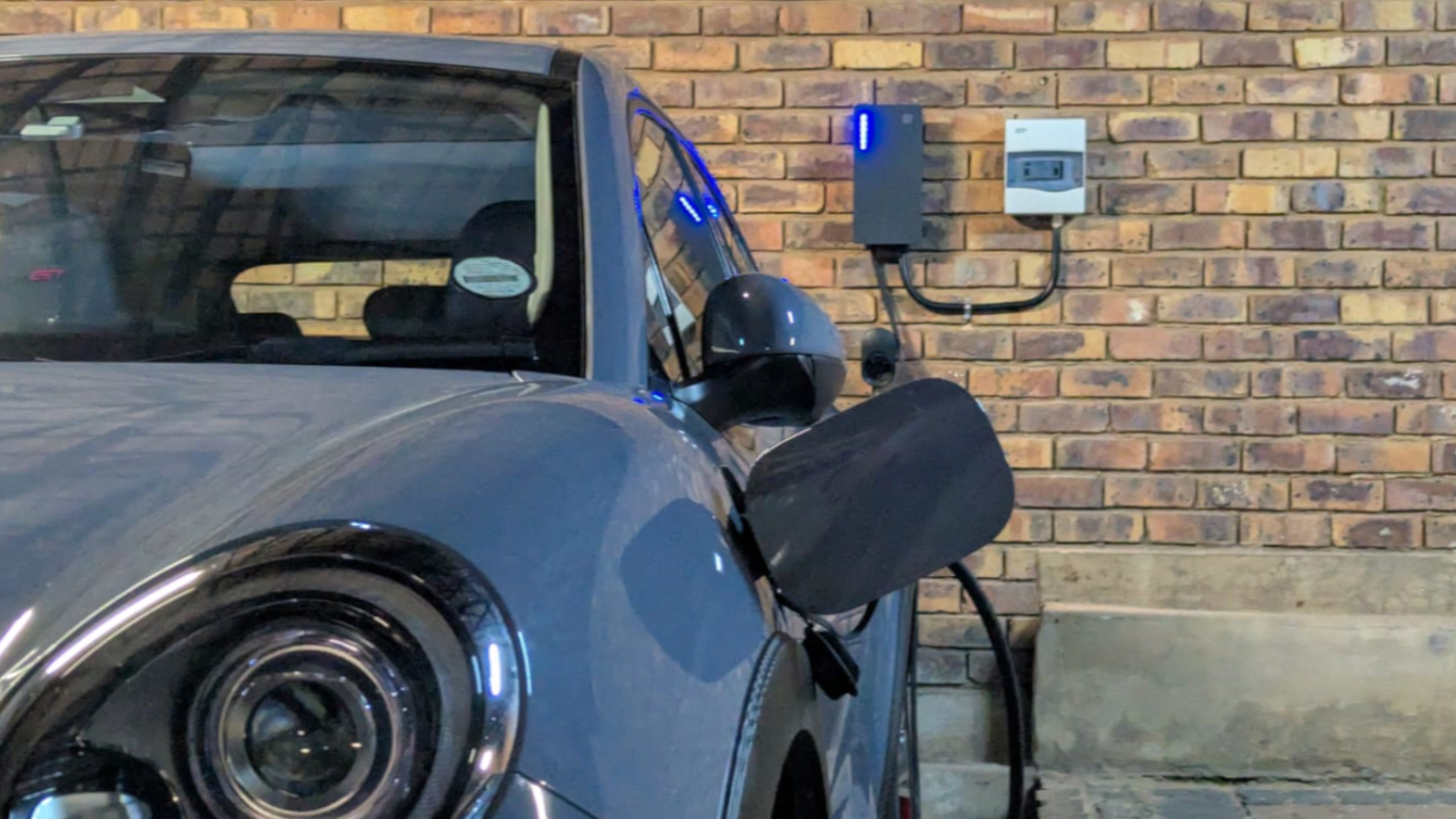
Complexes and estates typically get power from a mini substation (minisub), which converts high voltages from the grid into lower voltages safe for use in homes.
The future transition towards EVs was not a factor taken into account in specifying the power outputs these minisubs needed to supply.
It is still common practice to equip these properties with infrastructure capable of supporting a certain average power draw per unit or home, not their combined potential peak power draw.
Take a complex with 100 units, for example. Each unit might have a distribution board (DB) that can supply a combined 60 amps (60A) of current. Some might have lower 30A or 40A DBs.
A 60A supply would be capable of supporting each house with up to 13.8 kilowatt (kW) of power on South Africa’s mains voltage of 230 volts (230V).
If the complex were configured for the maximum draw of all units at any given time, it would need a capacity 100 times 13.8kW, working out to 1380kW.
Common Minisub Capacities
Minisub capacities are most typically expressed in kilovolt-amps (kVA). The kVA is the total amount of power capacity a system supports, accounting for internal energy use.
This includes energy needed to maintain magnetic fields in devices like motors and transformers.
To determine a system’s kW rating, a power factor of 0.8 is typically applied to the kVA rating to account for energy losses and internal energy consumption.
Typical minisub capacities for complexes range from 315kVA to 800kVA. These would have a peak power output 0.8 times the kVA rating, as illustrated below:
- 315kVA x 0.8 = 252kW
- 500kVA x 0.8 = 400kW
- 800kVA x 0.8 = 640kW
In a 100-unit complex, an 800kVA minisub with 640kW power is common. If each house had a peak 13.8kW power draw, it would be able to supply up to 46% of all power, or 6.4kW per unit.
The complex’s main circuit breaker is unlikely to trip as even the most power-intensive appliances typically pull around 2kW to 3kW, and often only for a short time.
EV chargers introduce a new reality
An integrated home charger can draw up to 7.4kW of power on a single-phase connection, more than the average allowed in the example above.
Unlike geysers, stoves, and other high-demand appliances, charges sometimes also need to run for several hours at a time to refill users’ batteries after a long trip.
If a quarter of the complex’s residents had chargers installed with no dynamic load management, they would take up 185kW — or 28% — of the total supply at peak draw.
The maximum capacity remaining for other demands would drop from 640kw to 445kW or just 4.45kW per unit.
That significantly increases the risk of a main breaker tripping or equipment overloading, especially during peak demand periods.
Upgrading minisubs to meet the increased demand will cost hundreds of thousands of rand.
Many property owners will be quick to dismiss this option, especially if they don’t drive an EV or PHEV themselves or own a house in a small complex with limited financial resources.
A hassle-free and automated fix
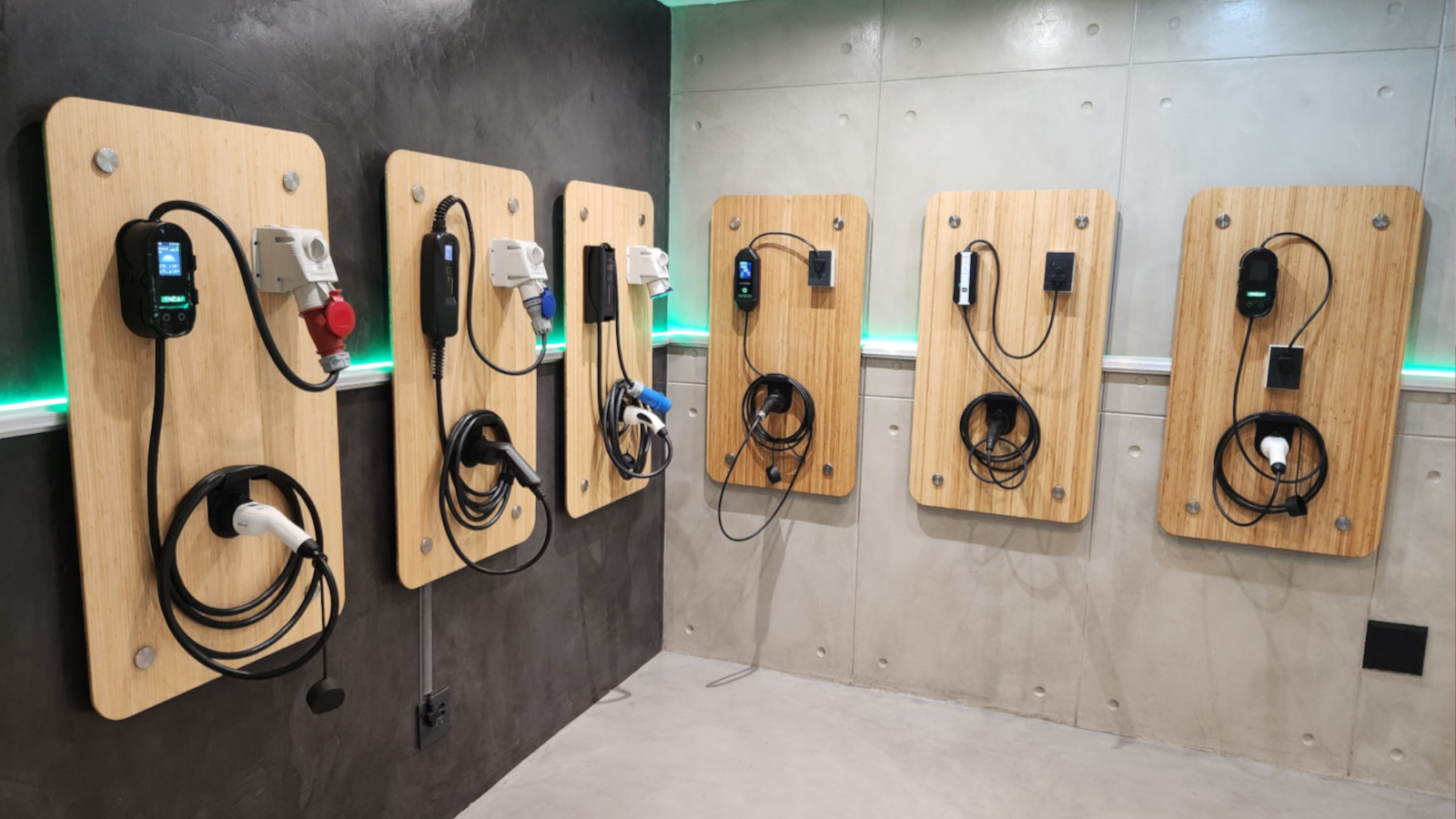
Many property managers will want to avoid the unnecessary time and effort of requesting drivers to limit their power draw.
Chargers with a dynamic load management systems (LMS) can automate this process by throttling charger power draw intelligently to only use spare minisub capacity when available.
An LMS can reduce the power provided to each charger or cut off charging completely in serious low-power situations.
However, using LMS-supporting chargers from different brands with their own apps and off-the-shelf software would also be an administrative pain.
BCs and HOAs might find themselves in a legal conundrum if they try to limit owners to a particular brand to resolve this issue.
Fortunately, Dutch non-profit organisation ElaadNL developed a universal language for EV chargers called the Open Charge Point Protocol (OCPP).
Conduit ChargeSplit
Conduit Energy has already developed an end-to-end solution that uses OCPP to solve power management challenges with the absolute minimum effort required from property managers.
Our offering starts with supplying high-quality OCPP-supporting chargers for dynamic load management.
We can appoint a qualified installer to fit and connect these to our Conduit ChargeSplit software. Property managers can also use their own installers.
They don’t have to use our chargers, either. As long as a charger supports OCPP, we can connect it to ChargeSplit and handle power management and billing.
ChargeSplit also supports multi-user authentication, which is essential when residents are sharing parking or allocated parking bays are far away from their own distribution boards.
We can bill each user individually — through a prepaid app wallet or a postpaid system with bills sent to managing agents, Body Corporates, and Homeowners’ Associations for adding to levy accounts.
We also offer a real-time dashboard where property managers can monitor all users’ consumption and even block access to chargers for those who don’t pay their levies.
Individual users get an app where they can initiate or stop charging and monitor their own consumption. Contact Conduit Energy today if you want to ensure your complex or estate’s EV charging network is future-fit.