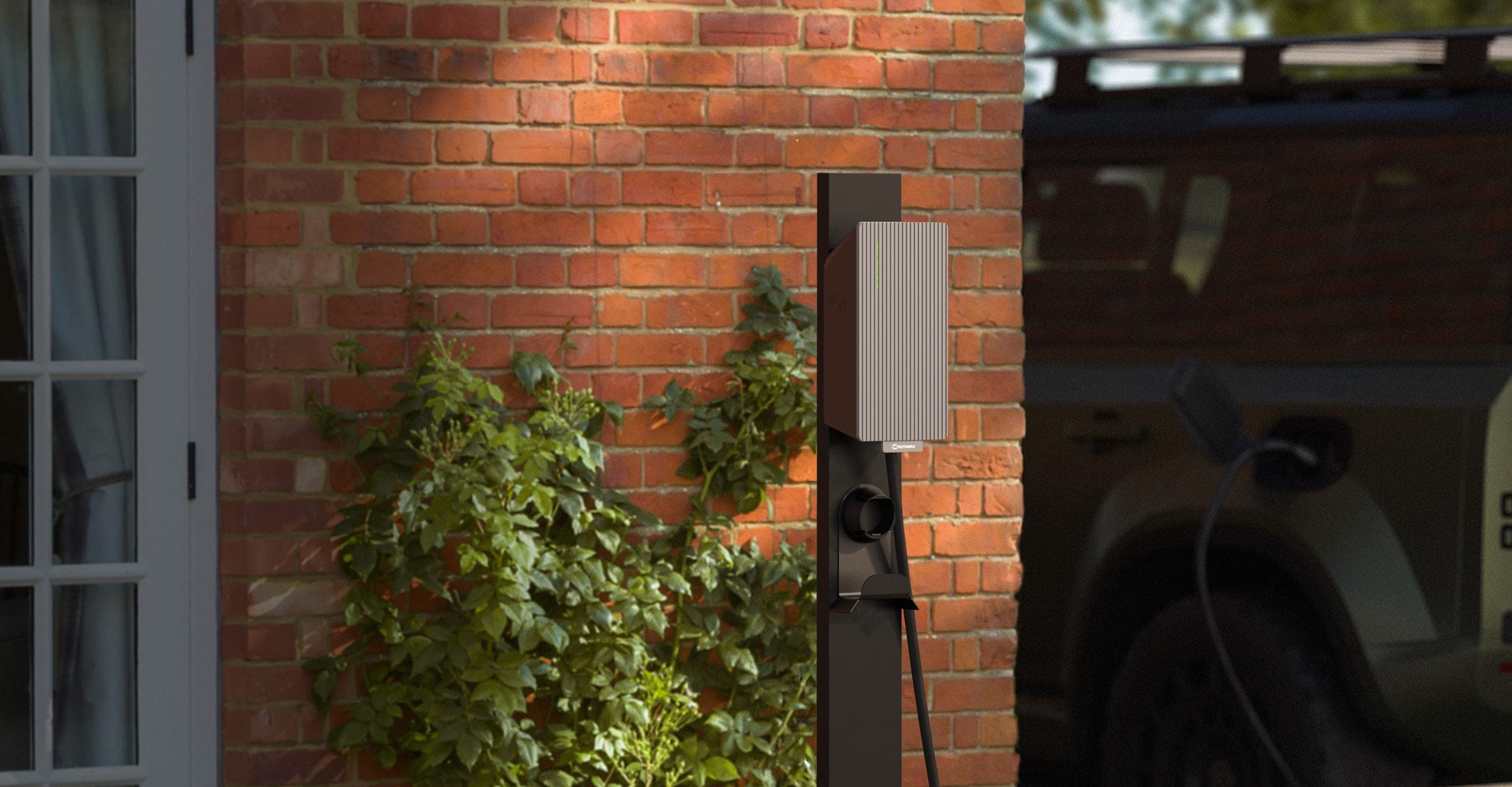
A TeltoCharge AC EV charger on a brick wall next to a parked car

We operate the charging.
You keep the margin.

We install it, we run it, and we meter every charge. Drivers pay by bank card.
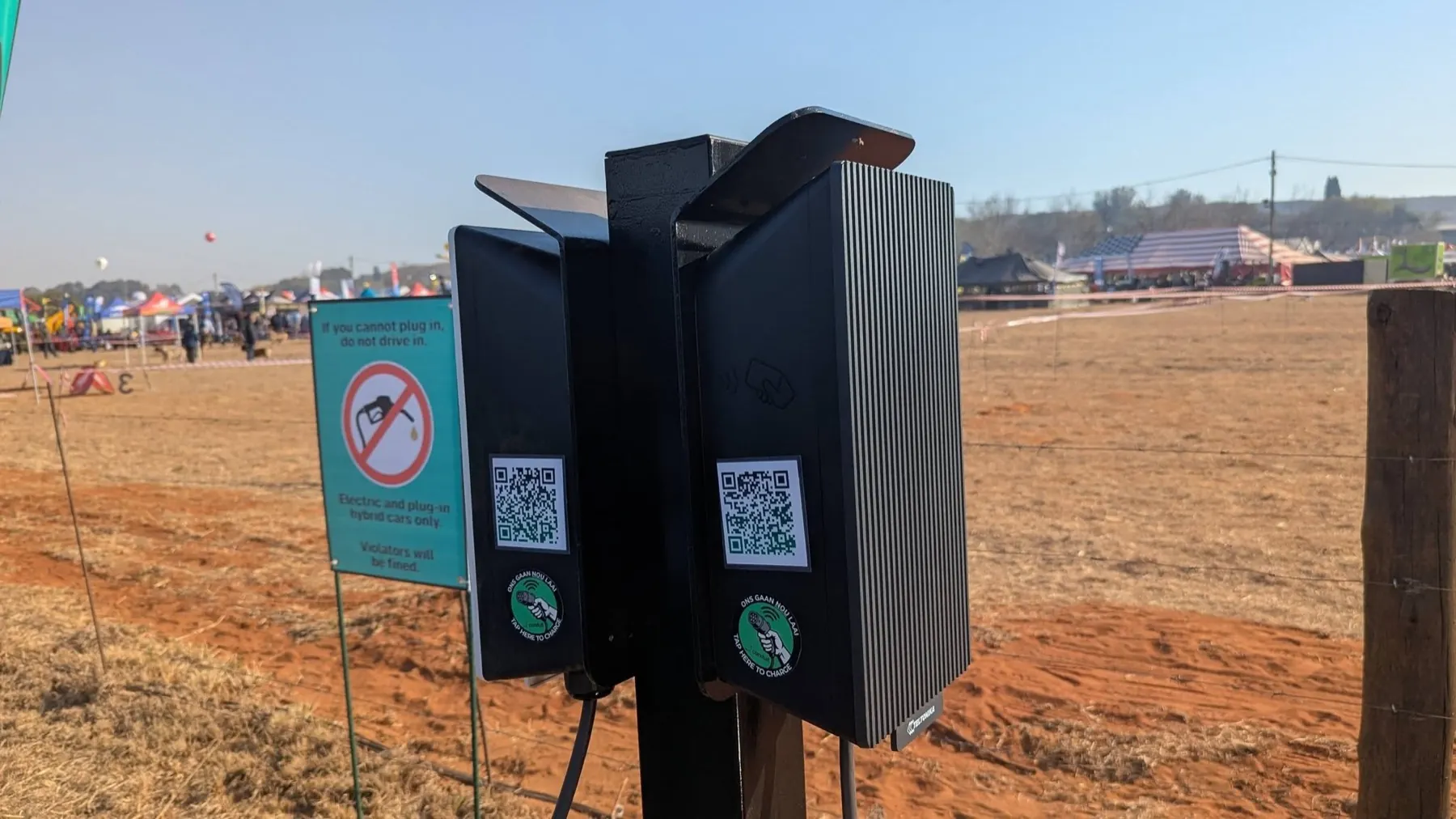
Two chargers with a QR code on each

Scan. Pay. Charge.

A bank card at the charger. No app, no wallet, no sub-meter.

No app.
Just a web page.

The driver scans, pays, and watches the kWh climb. Nothing to install, and no account to make.
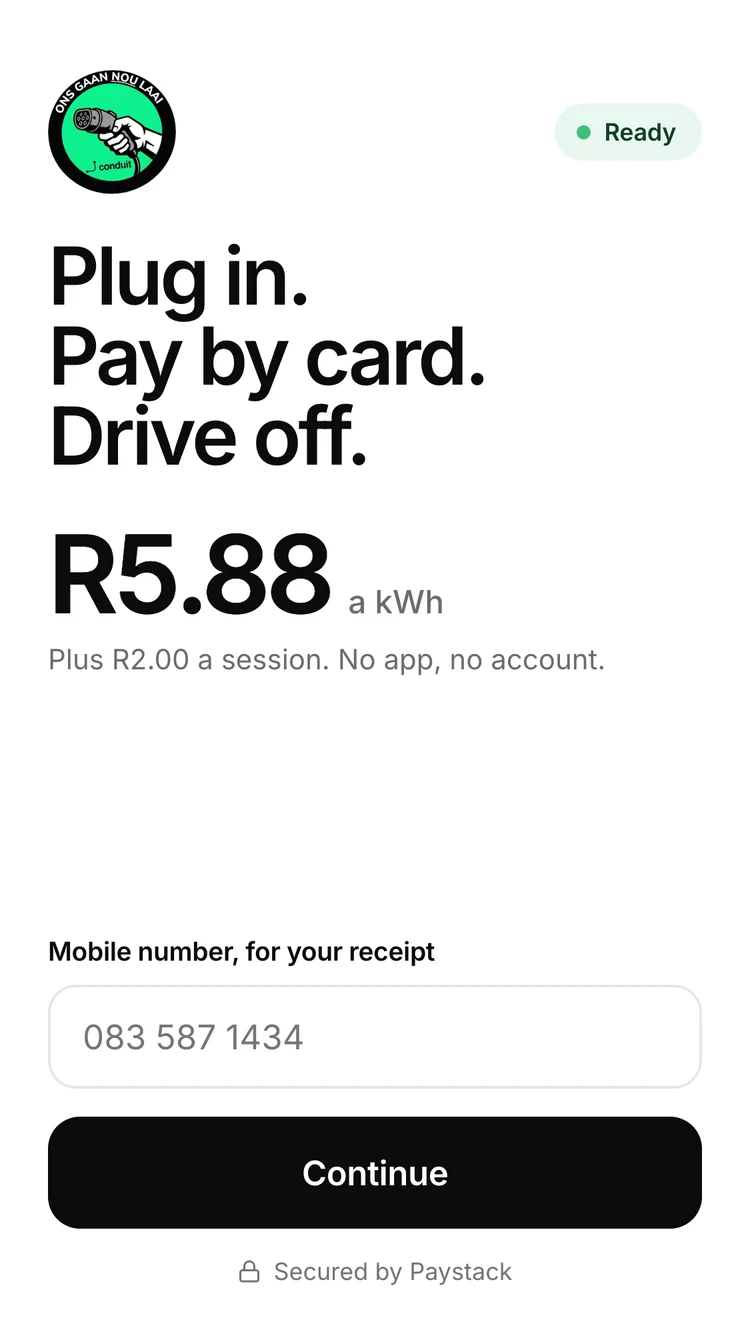
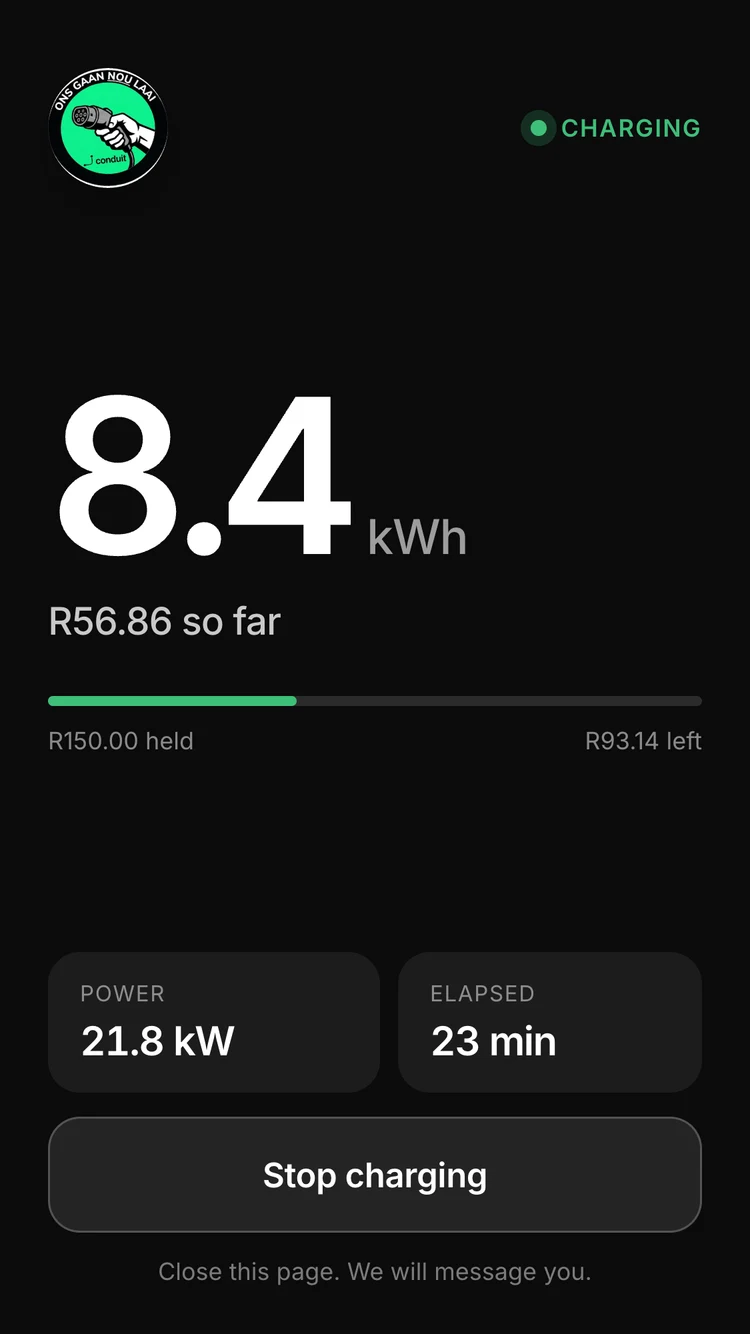
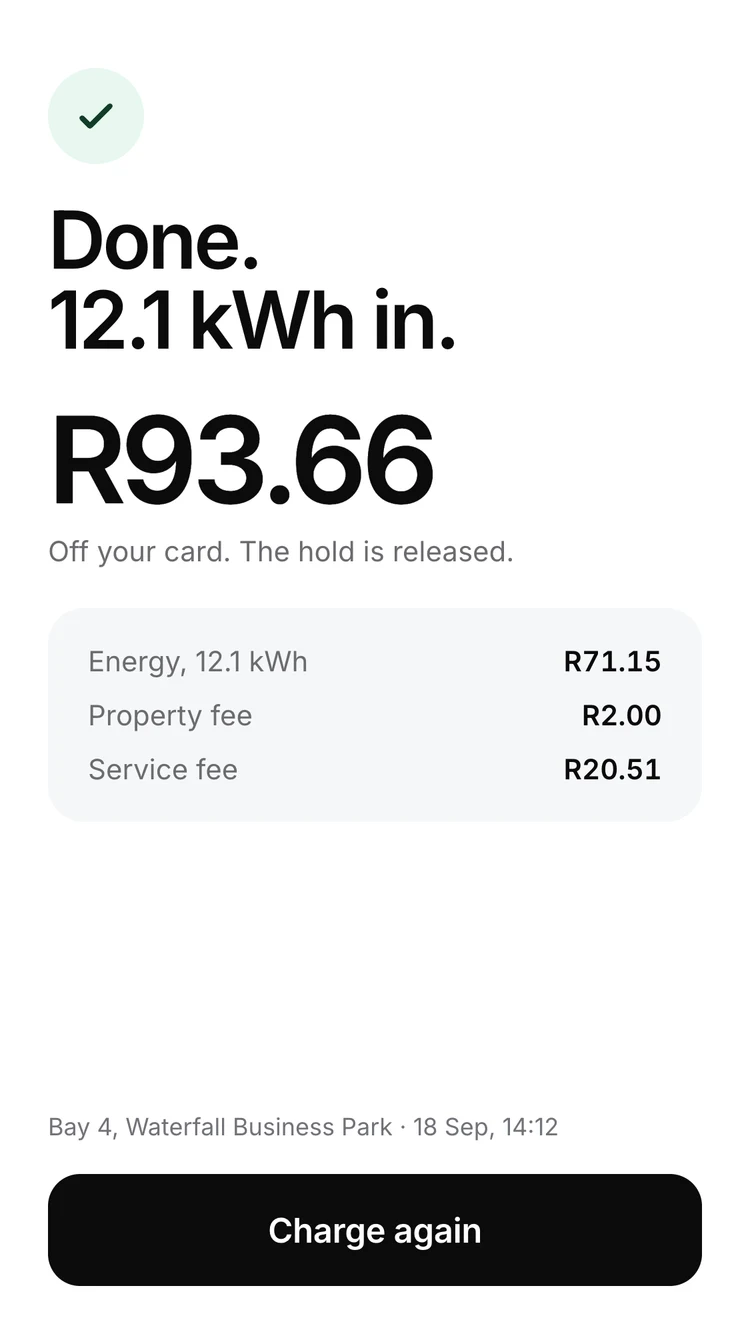
First screen: the price for each kWh, and a field for a mobile numberSecond screen: the charge in progress, with the kWh delivered so farThird screen: the receipt, with the energy, the site fee and the Conduit fee

Four ways
to run a charger.

You choose per charger. One site can use all four.

Prepaid

A visitor scans the QR code and pays with a bank card. No app, no account.

The Conduit fee is 12% of the energy plus the site fee. The driver pays it.

Free

The same scan, and nothing to pay. You cap each charge in kWh.

Conduit adds no fee.

ChargeSplit, on the levy

A resident uses a tap card. No money moves at the charger. You get one statement a month, by resident or by bay.

Conduit adds no fee. The Conduit subscription covers it.

ChargeSplit, on an account

The same tap card, billed to an account instead of the levy. For an employer or a fleet.

Conduit adds no fee. The Conduit subscription covers it.

R199 for each charger a month buys the billing, the load balancing and a place on the public map. To watch a charger costs nothing.
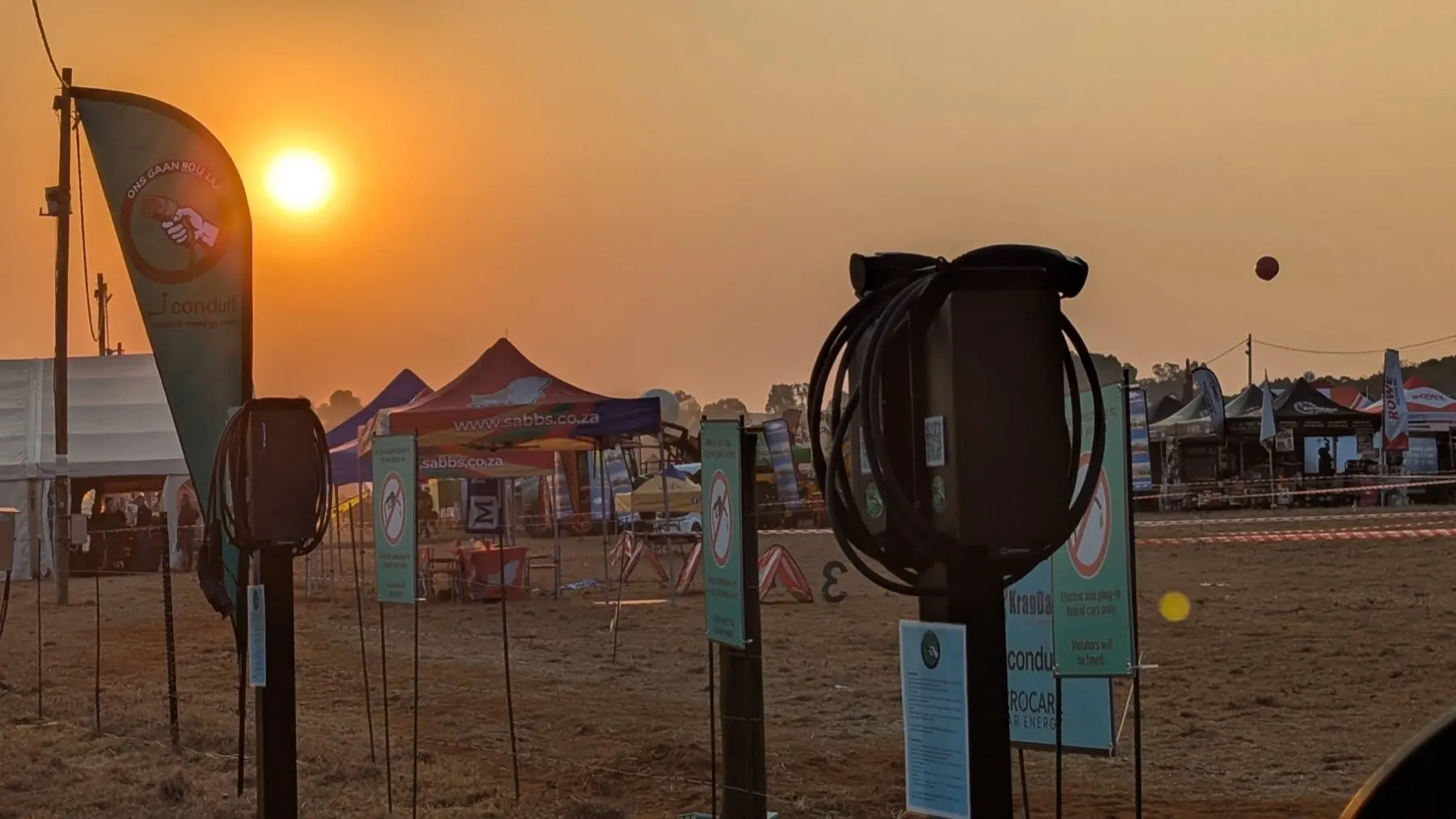
Four chargers in a field at sunset

A full car park.
One breaker.

Load balancing in software, over OCPP. No extra hardware on the wall.

Your tariff.
Your margin.

Energy bills at your property's own rate. Monitoring is free on a charger you buy from us. The Conduit subscription also opens your charger to drivers from outside the property.

R199
a charger a month, for billing, load balancing and a place on the public map
12%
of the energy plus the site fee, on a prepaid charge. The driver pays it.

While you subscribe, you can open a charger to drivers who do not live at the property. We list it on the Conduit public charger map. We also list it on the charging platforms drivers search. You choose which chargers go on the map. You can take one off at any time.
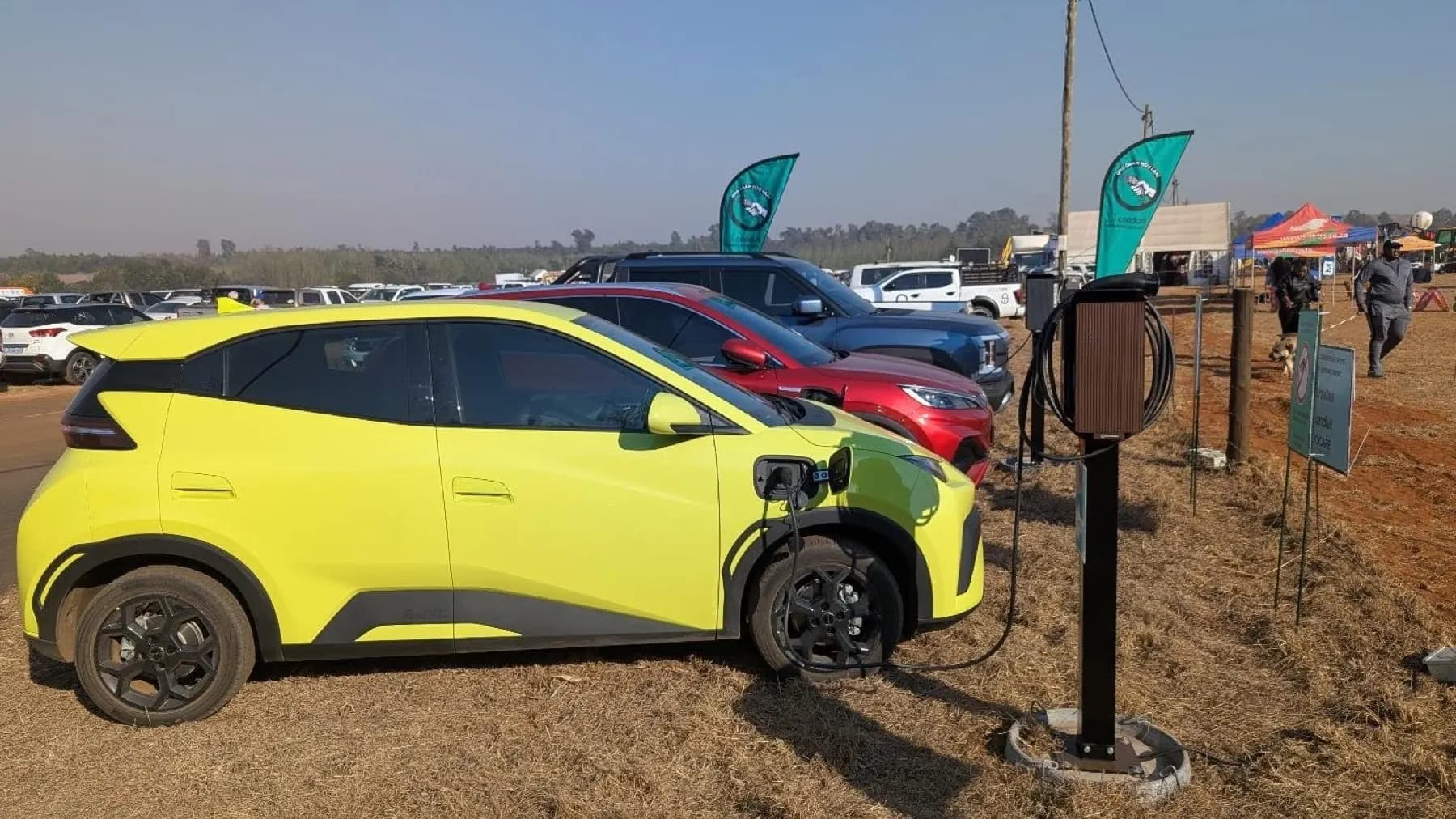
A yellow BYD Dolphin charges from a Conduit charger in a field

Four chargers in a field.

KragDag 2026. One weak rural supply, 36 charges, 12 drivers, 105 kWh. Every one paid by a bank card.

The charger, from
the people who bill it.

TeltoCharge from R11,495, front plate included. Installed in Gauteng.
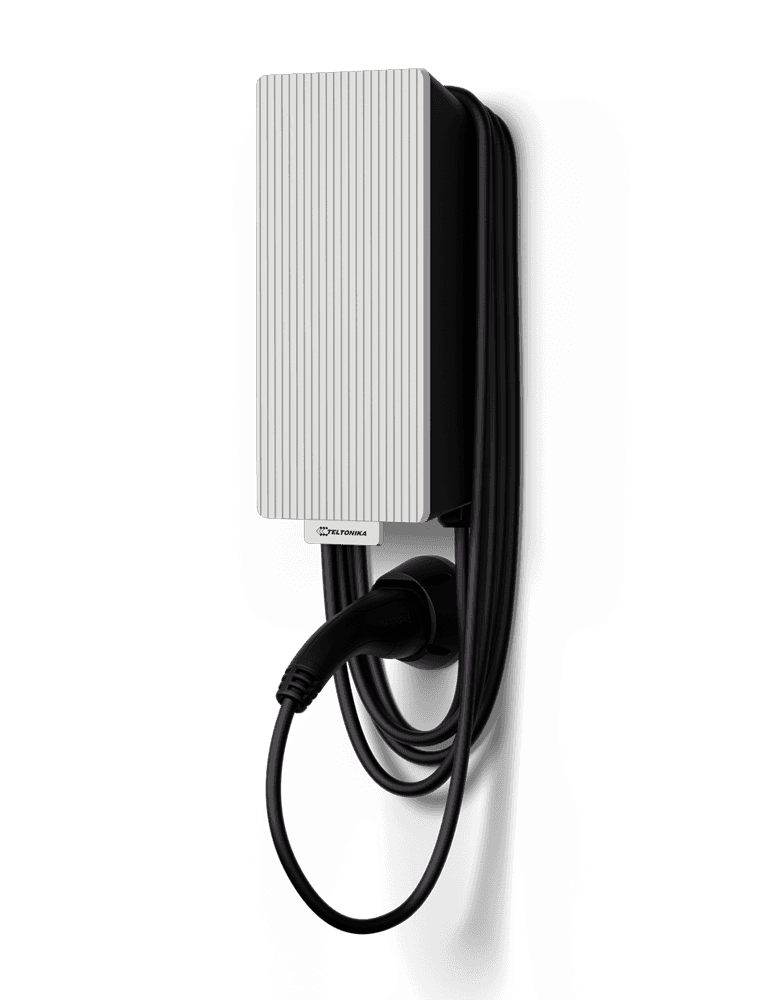
TeltoCharge EVC2 with a white front plate and a tethered cable

Common questions

Body corporates, managing agents, landlords and employers: anybody who must bill people for the energy a shared charger delivers. An individual EV driver can use it too.
Yes. One charger runs on the same Conduit subscription and the same web app. You get live charger status, remote start, the charge history, and the cost of each charge at your own tariff. You also get a charge schedule. Set a standing current limit, and add hours over the week that use a different limit. The car then charges overnight, and it stays slow or stopped by day. Email info@conduit-energy.com to get set up.
A driver pays for each charge at your property's own tariff. Prepaid means a bank card, an EFT or Apple Pay in a web app, with nothing to top up. ChargeSplit means we meter every charge remotely and send a breakdown for each person on the 1st. You bill each line on the levy, on a salary slip or on a debit order. Trustees get a live dashboard.
Yes. The visitor scans the QR sticker on the charger, which opens a web page. There is nothing to download and no wallet to load. The visitor plugs in and pays with a bank card, an EFT or Apple Pay. The charger starts on its own once the payment clears. The bank puts a hold on an amount before the charge, Conduit takes only what the charge used, and the bank releases the rest.
Yes, while the charger carries a Conduit subscription. Set it to accept anybody who pays by bank card, and ask us to put it on the map. We add it to the Conduit public charger map at conduit-energy.com/map, and to the charging platforms drivers search. A visitor can then find the bay and pay at it. You choose which chargers go on the map. Take one off at any time, and your residents charge exactly as before. Most Conduit chargers are not on the map, because they serve one complex.
Yes. Set a charger to free with a kWh limit for each charge, so a launch weekend or a resident perk stays under control. The charge stops by itself at the limit. While a charger is free, every charge starts from the QR page rather than from a tap card.
The public charger map at conduit-energy.com/map lists every Conduit charger that is open to the public. Each one shows its live status and its price for each kWh. Most Conduit chargers are not on it. They stand at homes and inside complexes, and they serve the people who live there.
A tap card, which we supply, or any smartphone. A driver can start a charge from the web app, so the charger needs no tap at all.
In Gauteng, yes. We install and commission the charger, and it is online in Conduit before we leave. Elsewhere, any registered electrician can do it, and we recommend installers with EV experience. South African law requires a dedicated DB connection with an addendum CoC.
Anything that speaks OCPP 1.6 or 2.0. We recommend and supply the Teltonika TeltoCharge. Its front plate snaps off, so you can match the charger to the wall it stands on.
No. That is what load balancing is for. Conduit shares your circuit's amps across every active car, and it reclaims the amps an idle or tapering car does not use. The total never goes above the supply, so the main breaker does not trip. If the site is genuinely full, the next driver waits a moment. Load balancing runs in software over OCPP, with no extra hardware.
No. It runs over the same OCPP connection we meter on, so there is no separate controller, current clamp or energy box. Each charger holds its last safe limit even if our server is briefly unreachable, so the circuit stays protected.
30 minutes after the installation is signed off.
You tell us your property's tariff plan, and we bill at exactly that rate from our public tariff catalogue. We support a PPA and an unusual setup too.
You choose per charger, and one site can mix them. Prepaid: a driver scans the QR code and pays with a bank card, an EFT or Apple Pay in a web app. The Conduit fee is 12% of the energy plus the site fee. The driver pays it. Free: the driver pays nothing, up to a kWh limit you set. ChargeSplit, on the levy or on an account: a resident uses a tap card that we supply, and not a bank card. No money moves at the charger. We send a statement for each resident or each bay, for the levy run or for a salary deduction. A ChargeSplit charge carries no Conduit fee for each kWh, and the Conduit subscription is the whole price. Conduit charges that subscription to a bank card you store, automatically, each month.
No. Buy a charger from us, and the monitoring is free for as long as you own it. That is live status, faults, connectivity, and the energy each charge used. The Conduit subscription starts only when you turn that charger into something that sells charging.
Monitoring is free on any charger you buy from us, for as long as you own it. R199 for each charger, every month. That covers the billing, the settlement and the load balancing, and it starts when you subscribe. The Conduit fee is 12% of the energy plus the site fee. The driver pays it on a prepaid charge. A ChargeSplit charge, on the levy or on an account, carries no Conduit fee for each kWh, because Conduit never touches that money. Conduit is not a VAT vendor, so neither fee carries VAT. Conduit never adds a margin to the electricity.
Of the energy plus the site fee, and of nothing else. Conduit adds no margin to the energy, and the site fee stays yours. The driver pays the Conduit fee on a prepaid charge, and the receipt names it on its own line. A ChargeSplit charge carries no Conduit fee for each kWh.
Pretoria, serving all of South Africa.